
Halina’s first husband, Dr Stanisław Szenicer, escaped the Ghetto but ultimately died during the war. Catholic doctors Andrzej Trojanowski and Natalia Radlińska, members of Żegota, the council for aid of Jews, helped smuggle the children to safety and were later named Righteous Among the Nations by Yad Vashem.
The character Maria draws inspiration from Maria Steckiewicz, an NKVD escapee and member of the Warsaw Underground, who helped hide Jewish children and ran the Anusia Orphanage in Konstancin. She was briefly imprisoned by the Gestapo during the war.
The play references various forms of collaboration under Nazi rule, including the Jewish Police during the 1942 deportations, the Polish Blue Police, and blackmailers who preyed on Jews hiding on the Aryan side.
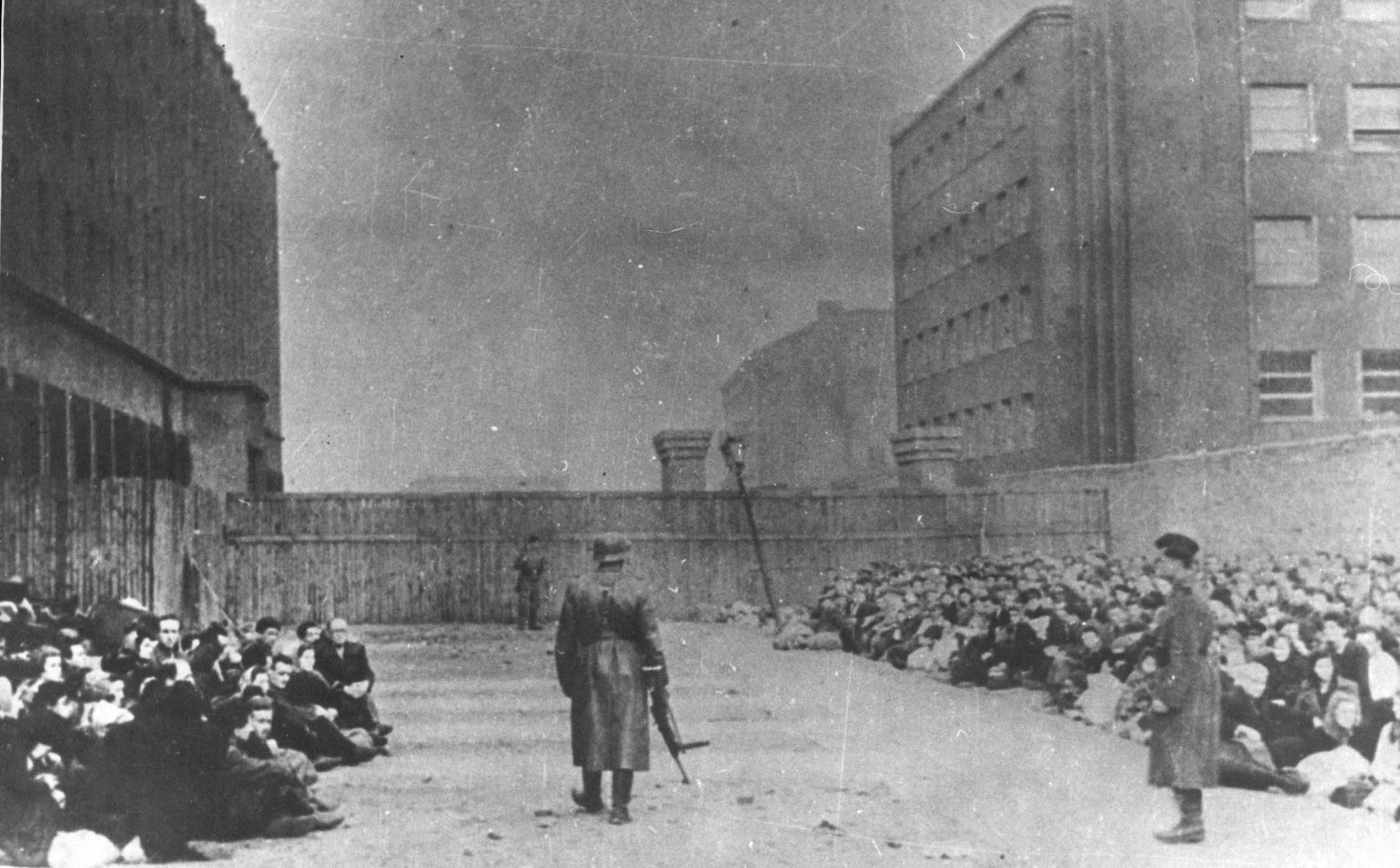
It also portrays abandoned children on the Umschlagplatz and the daily terror faced by families separated by the Ghetto walls.
Medical staff in the Ghetto created functioning hospitals and first aid stations despite starvation and overcrowding. Jewish resistance groups ŻOB and ŻZW organised the 1943 Ghetto Uprising.
On the Aryan side, Żegota supported Jews with false papers, shelter, food, and medical procedures to help them survive.
The Church’s role was complex: pre-war antisemitism contrasted with wartime acts of refuge in some monasteries and homes.